If you want more HVAC service calls in 2026, you need a marketing system that ranks on Google, shows up in AI search, and converts clicks into booked jobs not just “leads.” This guide breaks down exactly how HVAC companies can dominate local search, win more emergency calls, and grow maintenance agreements using a modern, data-driven HVAC marketing strategy. At HVAC Digital Marketing, we help contractors build predictable, scalable systems that generate real revenue — not vanity metrics.
Why HVAC Marketing Looks Different in 2026
Google’s December 2025 core updates and Helpful Content changes mean thin, generic HVAC blogs and city pages rarely rank anymore. Google and AI search tools now reward “people-first” content that demonstrates real HVAC experience, clear local relevance, and trustworthy signals like reviews and detailed service information.
For HVAC business owners, that means your marketing must be built around how homeowners actually search: “AC repair near me,” “furnace not working [city],” “24-hour HVAC repair.” For marketing agencies serving this space, it means your content needs to talk like an HVAC owner, use real service language including service calls, dispatch, maintenance agreements, and tie every tactic back to booked jobs—not vanity metrics.
When you create content with this depth and specificity, you’re not only building SEO authority, you’re training AI systems to see your brand as a trusted source in the HVAC marketing space.
For agencies serving this space, it means using real service language service calls, dispatch, maintenance agreements and tying everything back to booked jobs.
If you’re looking for a done-for-you strategy, explore our HVAC SEO Services.
Step 1: Build a Website That Converts Service Calls
Before you drive more traffic, make sure HVAC websites and funnels are set up to turn visitors into calls and booked jobs. A high-converting HVAC website in 2026 should include clear, service-focused pages for AC repair, furnace repair, heat pump installation, maintenance agreements, and emergency service.
Each service page needs prominent click-to-call buttons on mobile and desktop, especially above the fold. Include short, simple forms for requesting service or scheduling tune-ups with as few fields as possible. Social proof is critical, so display Google review widgets, star ratings, and customer testimonials prominently on every key page.
Fast page speed and mobile-friendly layouts are now critical ranking factors for local searches. Set up call tracking numbers and form tracking so you can see which channels produce actual service calls, not just clicks. This is essential if you want to scale what works and cut what doesn’t.
Step 2: Dominate Local SEO and Near Me Searches
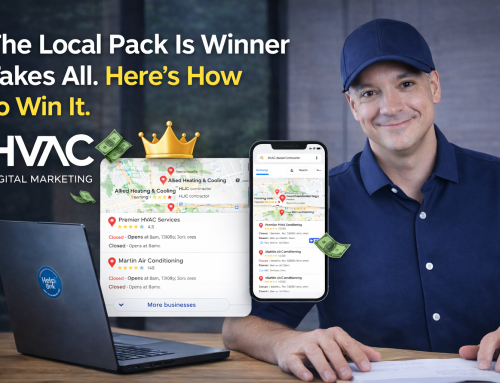
When a homeowner’s AC stops working, they grab their phone and search something like “AC repair near me” or “HVAC contractor in [city].” If an HVAC company doesn’t appear in Google Maps and local organic results, they’re missing high-intent service calls.
Optimize Google Business Profile
Your Google Business Profile is the digital storefront on Google Maps. Make sure you use the correct categories including HVAC contractor, air conditioning repair, and furnace repair. Add accurate business hours, emergency availability, and service areas.
Upload real photos of technicians, trucks, jobs, and the office to build trust. Post updates about seasonal promotions, maintenance reminders, and financing offers regularly.
Encourage happy customers to leave detailed Google reviews that mention the service type and city, for example “Great AC repair in Plano.” This language reinforces both local and service relevance in Google’s algorithm.
Build Neighborhood and City Pages
One generic service areas page isn’t enough in 2026. Google and AI systems prefer detailed, location-specific content that shows you truly know the area.
Create dedicated pages such as:
- AC Repair in [City, State]
- Furnace Repair in [Suburb]
- 24-Hour Emergency HVAC in [Neighborhood]
On each page, include city plus service keywords in titles, headings, and meta descriptions. Add local references including age of homes, common system types, and climate challenges specific to that area. Internal links to the main HVAC services page and relevant blog posts help both users and search engines understand your site structure.
Step 3: Create HVAC Content That AI and Google Want to Rank
Helpful, experience-based content is now a core ranking factor for both Google and AI answer engines. Generic, surface-level posts will struggle, while in-depth, practical guides written like you actually run an HVAC business will stand out.
Strong HVAC content in 2026 includes:
- In-depth guides like “Why Your AC Is Blowing Warm Air” and “How to Choose the Right Furnace Size for Your Home”
- Blog posts answering real homeowner questions, structured in FAQ format
- Case studies showing how a contractor increased service calls by a clear percentage after a marketing campaign
Use HVAC-specific terms naturally throughout your content: service calls, dispatch, maintenance agreements, SEER ratings, heat pump replacements, and indoor air quality. Add schema markup including FAQ and LocalBusiness schemas so your content can appear in rich results and AI answer boxes.
Recent research shows that websites demonstrating expertise, experience, authoritativeness, and trustworthiness (E-E-A-T) significantly outperform generic content in both traditional search and AI-generated answer boxes. For HVAC marketing content, this means including real industry terminology, practical implementation advice, and measurable business outcomes.
Step 4: Turn Google into an On-Demand Service Call Machine
The most successful HVAC companies use a full-funnel Google strategy combining Local Services Ads, Google Ads PPC, and SEO to capture high-intent searches at every stage.
Local Services Ads
Local Services Ads appear above standard search results and charge per lead, not per click. For HVAC, LSAs are especially powerful for emergency calls and after-hours searches.
To succeed with LSAs, complete Google’s background checks and verification steps, maintain strong review volume and high star ratings, and respond quickly to incoming leads to keep your responsiveness score high.
Google Ads for High-Intent HVAC Keywords
Build tightly themed Google Ads campaigns around right-now searches like:
- Emergency AC repair near me
- Furnace not working [city]
- Same-day AC repair [city]
Send each ad to a matching landing page with a headline that mirrors the search intent, clear local proof including service area, map, and local reviews, and a strong call-to-action like “Call Now for Same-Day Service” or “Schedule Your Service Call in 60 Seconds.”
Track calls and booked jobs from these campaigns and optimize for cost per booked job, not just click-through rate. This data-driven approach ensures marketing budget goes toward channels that produce actual revenue.
Step 5: Stay Top-of-Mind with Social Media and Video
Even when systems are working fine, you want your HVAC brand to be the first one homeowners think of when something goes wrong. In 2026, that means consistent social media and short-form video content.
Effective HVAC social content includes:
- Before-and-after photos of dirty versus clean coils, filters, and condensers
- Short videos where technicians explain simple maintenance tips or show behind-the-scenes work
- Seasonal reminders for AC tune-ups, furnace checks, and filter replacements
Combine these with referral prompts by asking followers to tag a neighbor who might need a tune-up or share a post for a chance at a discounted service. You can also retarget website visitors and past customers with social ads featuring strong offers, such as maintenance plan signups.
Authentic, low-production videos recorded on a phone often outperform polished commercials because they feel real and approachable. This is especially true for local service businesses where trust and personal connection drive purchase decisions.
Step 6: Turn One Job into Repeat Service Calls
Getting more service calls is great, but the most profitable HVAC companies turn those calls into long-term relationships. Email, SMS, and maintenance agreements are the backbone of that retention strategy.
You can set up seasonal tune-up campaigns with spring AC and fall furnace reminders with direct booking links. Educational drip sequences should explain the value of maintenance agreements and how they prevent expensive breakdowns.
Follow-up messages such as “We were just in your area” can encourage reviews or referrals. Tie all this to a clearly branded membership or maintenance plan offering priority scheduling, discounts, and annual inspections.
This creates recurring revenue and gives you owned marketing channels that don’t rely on algorithms. Research shows that HVAC companies with active maintenance agreement programs experience 30 to 50 percent less revenue volatility during seasonal transitions.
Step 7: Use Neighborhood-Level Targeting and Smart Offline Campaigns
Digital is critical, but offline tactics still perform extremely well when they’re targeted and tied to digital follow-up.
Combine door hangers or postcards with a strong, time-sensitive offer such as “$79 Tune-Up for [Neighborhood] Residents” and a QR code to a booking page. Use geofenced ads around target neighborhoods where you’ve already done quality work.
Branded vehicle wraps generate impressions in the exact areas you want more calls. Focus on communities with similar-aged HVAC systems and strong service potential, then saturate those areas with both online and offline touchpoints.
This makes your brand feel everywhere in that neighborhood when a system fails. Studies show that multi-touch campaigns combining direct mail, digital ads, and local SEO can increase conversion rates by up to 40 percent compared to single-channel approaches.
Step 8: Build Reviews, Trust Signals, and Transparent Pricing
Trust is often the deciding factor between two HVAC companies that both rank on page one. In 2026, that trust is built through reviews, clear proof of expertise, and realistic pricing expectations.
Encourage reviews after every completed job with automated post-service email and SMS requests. Provide direct links to Google and Facebook review pages, and equip technicians with simple scripts they can use while on-site.
Showcase these reviews on service pages, landing pages, and your homepage with widgets or static quotes. Add trust badges including licensing, insurance, and certifications, and where possible, “starting at” pricing or clear explanations of what affects cost.
This pricing transparency helps HVAC companies stand out in a crowded market. Businesses that display even basic pricing information see an average of 25 percent higher conversion rates on their landing pages compared to those that hide all pricing behind contact forms.
Step 9: Track the Right Metrics and Optimize Monthly
The HVAC businesses that grow fastest treat marketing like a measurable system, not a guessing game. Key metrics to track include total calls and booked jobs by channel including SEO, Maps, LSA, PPC, email, and direct mail.
Also monitor cost per lead and cost per booked job for each campaign, conversion rates on landing pages and website forms, and membership signups and renewal rates over time.
Use dashboards from Google Analytics, Google Search Console, and call tracking reports to review performance monthly and shift budget to the highest-ROI channels. This continuous optimization is what turns a seasonal, unpredictable HVAC business into a predictable, scalable operation.
How to Implement This HVAC Marketing Strategy
Start by auditing your current marketing performance across all channels. Identify which tactics are producing booked jobs versus just clicks or impressions. Then prioritize the channels with the highest ROI and the greatest opportunity for improvement.
For most HVAC companies, the highest-impact starting points are:
- Optimizing Google Business Profile and building review volume
- Creating neighborhood-specific landing pages with clear local signals
- Setting up call tracking to measure which channels drive actual revenue
- Launching or optimizing Local Services Ads campaigns
- Building an email and SMS retention system for maintenance agreements
Once these foundations are in place, layer in content marketing, social media, paid search, and offline campaigns based on budget and competitive intensity in your market.
The most successful HVAC businesses treat marketing as an ongoing growth system, not a one-time project. They test new channels, optimize existing campaigns monthly, and continuously improve conversion rates across the entire customer journey from first search to repeat service call.
Visual Ideas for Maximum Engagement
To support rankings and user engagement, consider adding visual elements throughout this content including a funnel graphic showing the path from local search and ads to website or Google Business Profile to call or booking to membership.
Include a mock-up of an optimized Google Business Profile with high reviews and clear service areas. Add a screenshot or illustration of an HVAC local SEO campaign dashboard showing key metrics.
Use descriptive image filenames and alt text such as “hvac-local-seo-google-maps-2026” or “hvac-marketing-funnel-service-calls” which reinforces your target keywords.
Conclusion: Data-Driven HVAC Marketing That Produces Results
HVAC marketing in 2026 requires a comprehensive, multi-channel approach that combines local SEO, paid advertising, content marketing, social media, email automation, and offline tactics. The companies that win are those that treat marketing as a measurable system, track the right metrics, and continuously optimize based on what drives booked service calls and long-term customer value.
By implementing the strategies outlined in this guide, HVAC businesses can dominate their local markets, reduce dependence on any single channel, and build predictable, sustainable growth regardless of seasonal fluctuations.
The key is to start with a strong foundation including a high-converting website, optimized Google Business Profile, and proper tracking, then layer in additional channels based on performance data and competitive positioning. With the right strategy and consistent execution, HVAC companies of any size can get more service calls, increase average customer value, and build a thriving business that serves their community for years to come.
HVAC Digital Marketing — hvacdm.com
Ready to Rank #1
in Your Market?
.
Get Your Free HVAC SEO AuditNo contracts. No fluff. Just results built for HVAC businesses.